

Ethylene-Vinyl Acetate (EVA) Film for Solar Panels
 EVA (Ethylene Vinyl Acetate) hot melt adhesive sheets are a form of thermoplastic glue that softens when heated and solidifies when cooled, resulting in strong connections between materials.
In the solar industry, ethylene-vinyl acetate (EVA) film is widely used to encase photovoltaic (PV) modules. This essential component shields solar cells from external elements including moisture, UV light, and heat stress.
We provide high-performance EVA sheets that are rigorously validated and tested for quality. To specifically address the requirements of solar panel producers, we provide bespoke EVA films in a range of sizes, kinds, and thicknesses.
Our cutting-edge EVA film solutions are made to increase solar panels' lifespan and efficiency, making them more dependable and durable in a variety of environmental settings. Manufacturers can guarantee the best possible protection and performance for their solar modules by selecting EVA films.
In solar panels, what is EVA film used for?
The most widely used encapsulating material in the solar photovoltaic (PV) module manufacturing sector is EVA film. Solar cells are laminated between EVA sheets using a laminator while compressed and vacuumed.
At temperatures as high as 150°C, this activity takes place. EVA film is a hot-melt adhesive film used in solar cells. It is not sticky at room temperature, but when heated to a high temperature and heat-pressed, it solidifies and becomes adhesive, becoming fully transparent.
After curing, the film has excellent light transmission, robust adhesion, thermal stability, airtightness, and age resistance. Extensive experience has demonstrated that EVA film performs satisfactorily when used outdoors and for encapsulating solar cells.
The vulnerability of EVA film to UV deterioration is a disadvantage, though.
Extended-Duration Encapsulation and Defense
The crystalline silicon cell assembly is encapsulated by cured EVA during the vacuum lamination process. It forms an integrated unit by bonding with TPT (Tedlar-PET-Tedlar composite film), the lower protective layer, and glass, the upper protective material.
Following lamination, the EVA sheet serves as a barrier to prevent dust and moisture from entering the solar panel. This is essential to preserving the solar cells' long-term dependability and performance.
Additionally, the solar cells may "float" between the glass and backsheet thanks to EVA film. By reducing hits and vibrations, this floating effect helps shield the solar cells' internal circuitry from mechanical stress.
Furthermore, the attachment of EVA to glass can improve the glass's inherent light transmittance.
How Thick is the EVA in Solar Panels?
Typically, EVA film used in solar panels has a thickness of 0.4 to 0.6 mm. This thickness was selected with care to provide a level and consistent surface, which is essential for the efficient encapsulation and safeguarding of the solar cells.
The crosslinking ingredients in the EVA film allow it to crosslink at a curing temperature of about 150°C. Extrusion molding is used to accomplish this procedure, creating a solid adhesive coating that firmly attaches the solar cells to the protective layers.
Anti-ultraviolet, antioxidant, and curing chemicals are frequently included into an EVA film layer with a thickness range of 0.4–0.6 mm. The process of sealing and bonding between EVA, glass, and backsheet depends on these elements.
Why is EVA Film Optimal for Photovoltaic Arrays?
EVA film excels in solar panel construction due to its beneficial traits:
1. Light Permeability: Allows maximum sunlight to reach cells.
2. Adhesive Prowess: Unites panel components securely.
3. Resilience: Withstands environmental challenges.
4. Pliability: Absorbs stress, safeguarding cells.
5. Chemical Fortitude: Resists corrosive substances.
These characteristics boost efficiency, longevity, and robustness of solar modules.
| Electrical Insulation | Chemical Insulation | Fire insulation | Thermal insulation |
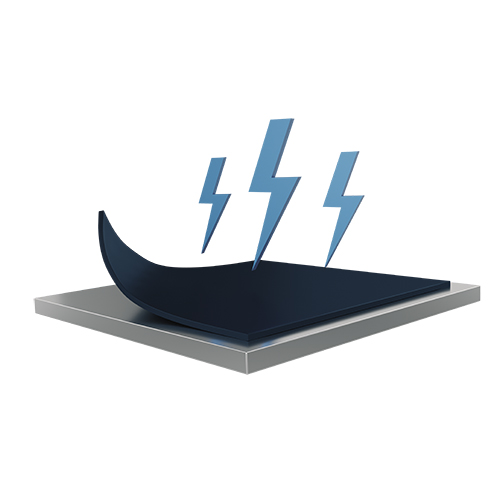 |
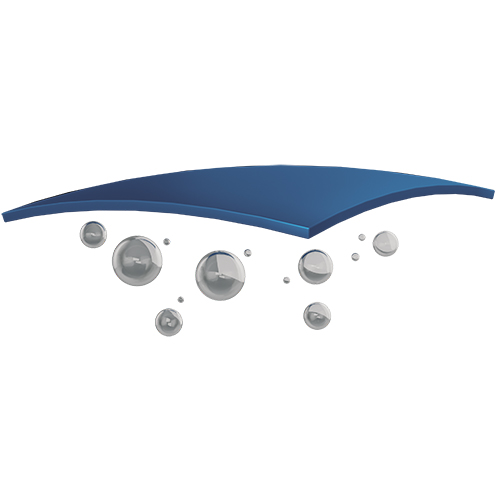 |
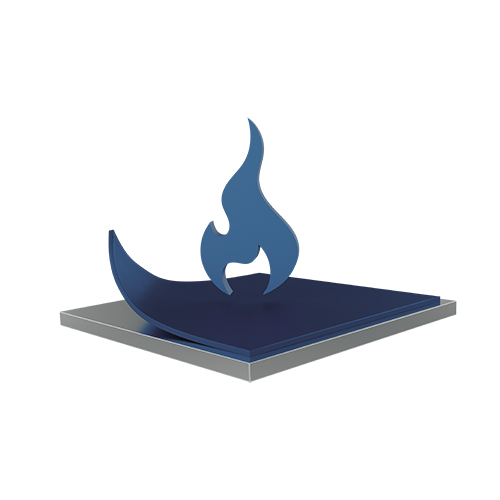 |
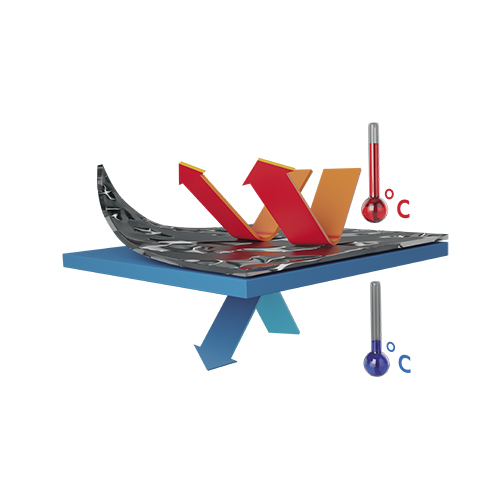 |
Applications
- Solar Panel Encapsulation
- Industrial Applications
- Chemical Resistance
FAQ
What is EVA film made of?
What temperature range can EVA film withstand?
How is EVA film installed on solar panels?
Ethylene-Vinyl Acetate (EVA) Film for Solar Panels
- Brand: GTeek
- Product Code: Ethylene-Vinyl Acetate (EVA) Film for Solar Panels
- Availability: In Stock

Available Options
Related Products

PVF (Polyvinyl Fluoride) film
PVF (Polyvinyl Fluoride) film PVF (Polyvinyl Fluoride) film is one of the most versatile films available. Its different variations (thicknesses, colors, etc.) enable it to meet a wide range of customer requirements. Its chemical, mechanical and electrical properties make it an excellent option for its performance in outdoor applications, as well as for demolding problems. PVF (polyvinyl fluoride) films are made up of over 150 oriented and cast films to serve a wide variety ..

FEP (fluorinated ethylene propylene) film
FEP (fluorinated ethylene propylene) film FEP (Fluorinated Ethylene Propylene) films are fluoropolymers that offer design flexibility for all kinds of high-performance applications. FEP is transparent and can be heat-sealed, thermoformed, welded and heat-bonded. FEP films/foils are made using a melt extrusion casting technique from Fluorinated Ethylene Propylene (FEP) resin. All the advantages of fluorinated films—including excellent dielectric performance, high t..

ETFE Film (Ethylene TetraFluoroEthylene)
ETFE Film (Ethylene TetraFluoroEthylene) ETFE (Ethylene TetraFluoroEthylene) films are transparent copolymers with exceptional technical characteristics, including high resistance to external aggression and chemicals. Tetrafluoroethylene (ETFE) and ethylene are copolymerized to create ETFE film. Over a broad temperature range, exceptional performance and dimensional stability are attained. ETFE is a commonly used high performance film material because of its remarkable ..

EVA Hot Melt Adhesive Film
EVA Hot Melt Adhesive Film EVA (Ethylene Vinyl Acetate) hot melt adhesive sheets are a form of thermoplastic glue that softens when heated and solidifies when cooled, resulting in strong connections between materials. Features of EVA Adhesive Films EVA adhesive films are extremely flexible, making them perfect for applications requiring bending or stretching, such as textiles, footwear, and flexible packaging. Transparency: EVA films frequently have great transparency, m..

PVDF film (PolyVinyliDene Fluoride)
PVDF film (PolyVinyliDene Fluoride) Out of all the fluoropolymer films, PVDF film has the best resilience to weathering. PVDF film is a desirable product for various outdoor protective coatings due to its outstanding abrasion resistance, UV stability, and capacity to tolerate large temperature swings. PVDF (PolyVinylidene Fluoride) film has a broad chemical resistance, which makes it a great option for tank linings. It may also be used to create thermoformed pump d..
Tags: Ethylene-Vinyl, Acetate, (EVA), Film, for, Solar, Panels